


Every four years, the FIFA World Cup turns the planet into one enormous psychology experiment. Billions of people suddenly care deeply about teams, tactics, and tiny moments of individual genius. Underneath the goals and glory, something else is unfolding: a living display of radically different Value Types and Thinking Styles, all colliding on the same pitch.
MindSonar measures exactly those two dimensions: what a person finds worth fighting for in a specific context, and how they process information to get there. Watching the World Cup through that lens changes what you see.
In this article
A century of football and the mind
The first World Cup in 1930 had 13 nations, no analytics, no sports psychologists on the bench. What drove performance was almost entirely Purple and Red: collective tribal belonging and raw individual will. That is where the story starts.
Uruguay’s shock win over Brazil at the 1950 Maracanã, in front of nearly 200,000 people who had already printed winner’s medals, was a demolition of collective psychological certainty. It demonstrated something MindSonar practitioners recognize immediately: shared assumptions about outcomes are as dangerous as any tactical weakness.
Brazil’s 1970 squad in Mexico is still the benchmark. What Pelé, Jairzinho, Tostão, and Rivellino produced was not just beautiful football. It was a rare alignment of Purple collective identity, Red individual brilliance, and Green flowing cohesion, operating simultaneously at the highest level of competition.
Maradona in 1986 compressed the entire spectrum into a single match. The Hand of God was Red imposing its will on reality by any means available. The Goal of the Century, four minutes later, was Red operating at pure technical transcendence. Both emerged from the same motivational core: total individual conviction in the decisive moment.
Roberto Baggio’s missed penalty in 1994, eyes closing as the ball sailed over the bar, illustrated a different lesson. It captured the moment when away-from motivation, the fear of missing, overrides toward motivation. Zidane’s headbutt in 2006, in the final match of his career, showed what happens when a value type conflict cannot be resolved under maximum pressure. Germany’s 7-1 demolition of Brazil in 2014 showed an entire collective identity disintegrating when its psychological foundations were removed.
Morocco at the 2022 tournament produced the most complete expression of Purple Value Type energy in modern World Cup history. They reached the semifinal not despite their cultural identity but because of it. The team, the tribe, and the entire continent behind them were inseparable.
The Value Types at every World Cup
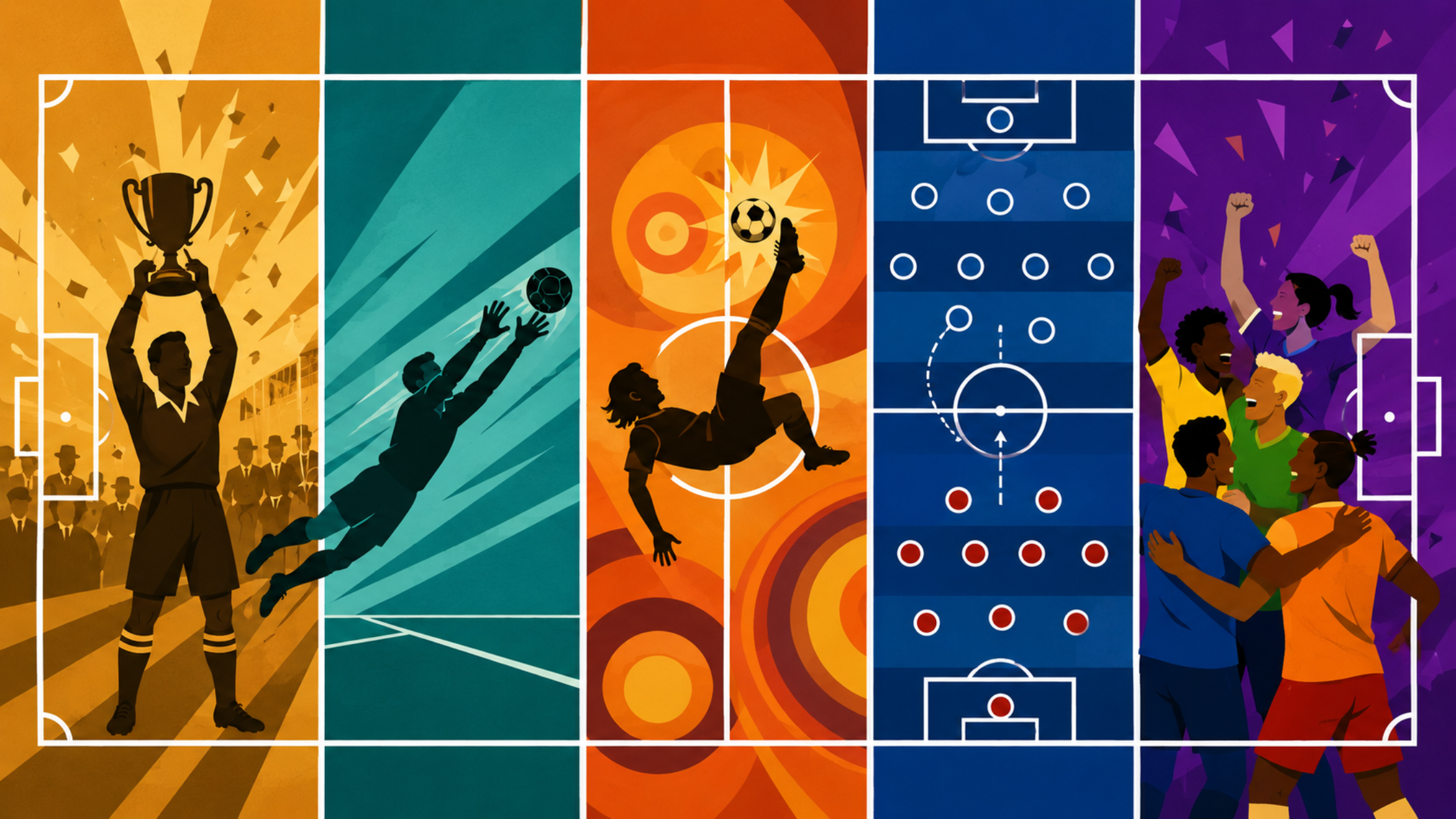
MindSonar’s Value Types, based on the Graves Motivational Drives, describe what a person or a group finds worth fighting for in a specific context. At the World Cup, you can spot nearly every level of that framework without leaving the stadium.
Purple roars from the stands. Fans paint their faces in national colors, sing ancestral songs, and treat their team’s fortunes as collective fate. When Morocco’s players prostrated themselves in prayer after their 2022 semifinal run, or when West African fans danced in patterns passed down through generations, Purple was operating at full volume. The team is the tribe. The tribe is everything.
Red lives in the player who bursts past defenders as though physics do not apply to them. It is raw individual expression: I am here, watch me. Red does not think in terms of systems or collective good. It thinks in terms of dominance and impact. At its best it produces moments replayed for generations. At its worst it produces players who cannot function inside a structure.
Blue is the value type of great defensive architectures. Italy’s catenaccio. Germany’s organized pressing. The meticulous set-piece routines drilled into players until they become instinct. Blue coaches carry clipboards with quasi-religious reverence. Roles are clear. Rules are sacred. Consistency is the weapon.
Orange runs the modern game at the institutional level. It is the analytics department calculating expected goals and pressing intensity. The recruitment strategy that turns smaller nations into tournament contenders. Orange coaches treat opponents as systems to be analyzed and exploited. They measure everything and feel nothing superstitious about it.
Green shows up in squads that play with remarkable cohesion, where no single ego dominates. Spain’s tiki-taka era was partly Green: the ball belongs to everyone, the goal is collective flow. Green also surfaces in the conversations surrounding multicultural squads and in the profound question of what it means to represent a country in a sport that increasingly ignores borders.
How the best players actually think
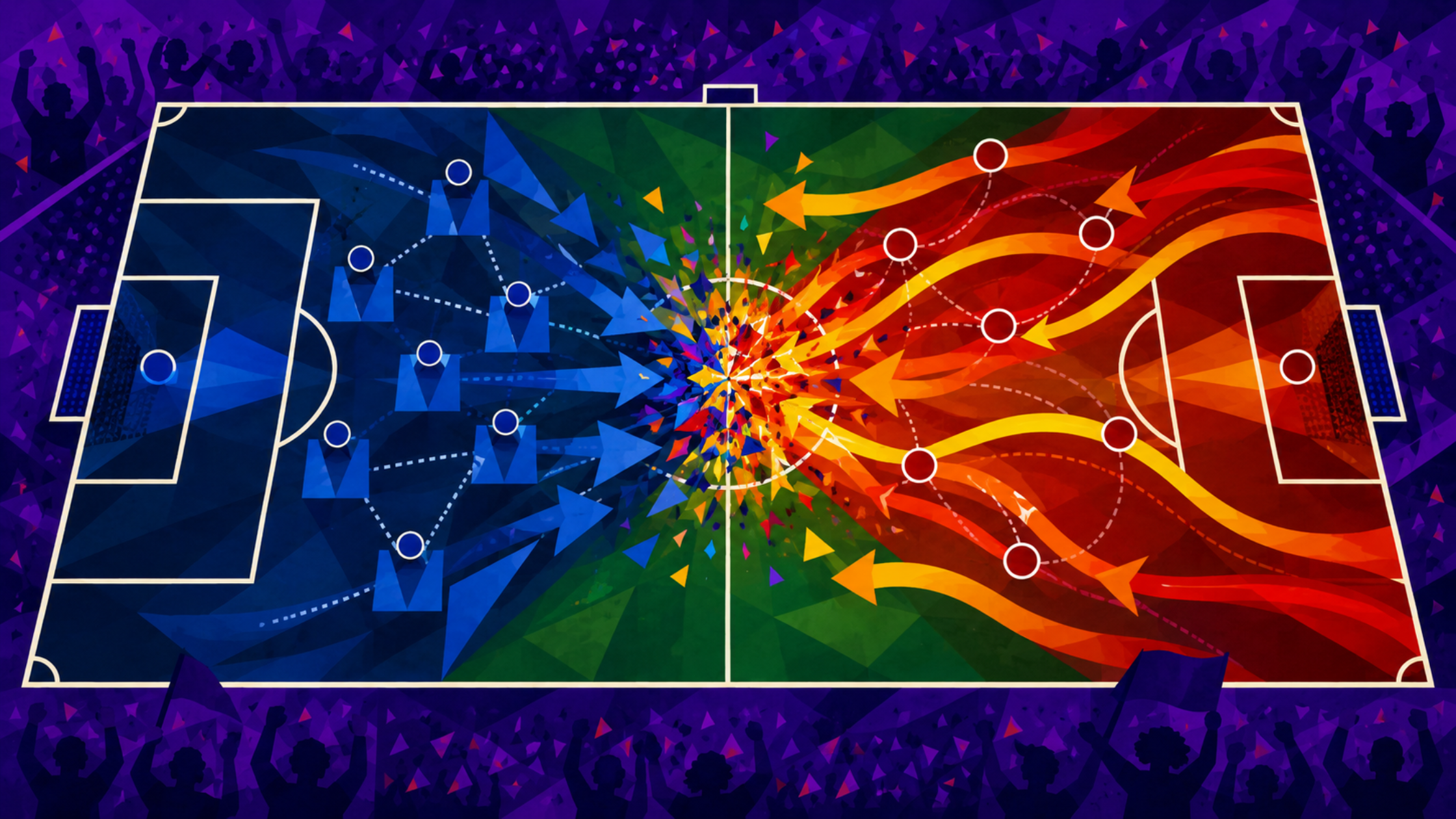
MindSonar’s Thinking Styles reveal just as much as Value Types, especially when you compare elite players and coaches under the same high-stakes conditions.
The great playmakers, the midfielders who see passes before they exist, are extreme big-picture thinkers who switch instantly to detail focus when executing. They scan the field in wide-angle and zoom to millimeter precision in the fraction of a second between receiving the ball and releasing it. Xavi and Iniesta in Spain’s 2010 triumph operated from this pattern with almost mechanical consistency.
Top strikers tend to be intensely proactive and toward-motivated, driven by the goal in front of them rather than the fear of missing. Defenders and goalkeepers, by contrast, often score high on away-from motivation: their entire job is preventing something bad from happening. Same sport. Opposite motivational direction. Both essential.
Coaches like Guardiola operate with strong internal reference, trusting their own framework deeply regardless of outside opinion. Others, who continuously reshape their systems based on opponent feedback, show external reference patterns. Neither is wrong. They are different cognitive tools for the same challenge, and identifying which pattern a leader operates from is fundamental to developing them effectively.
When systems collide
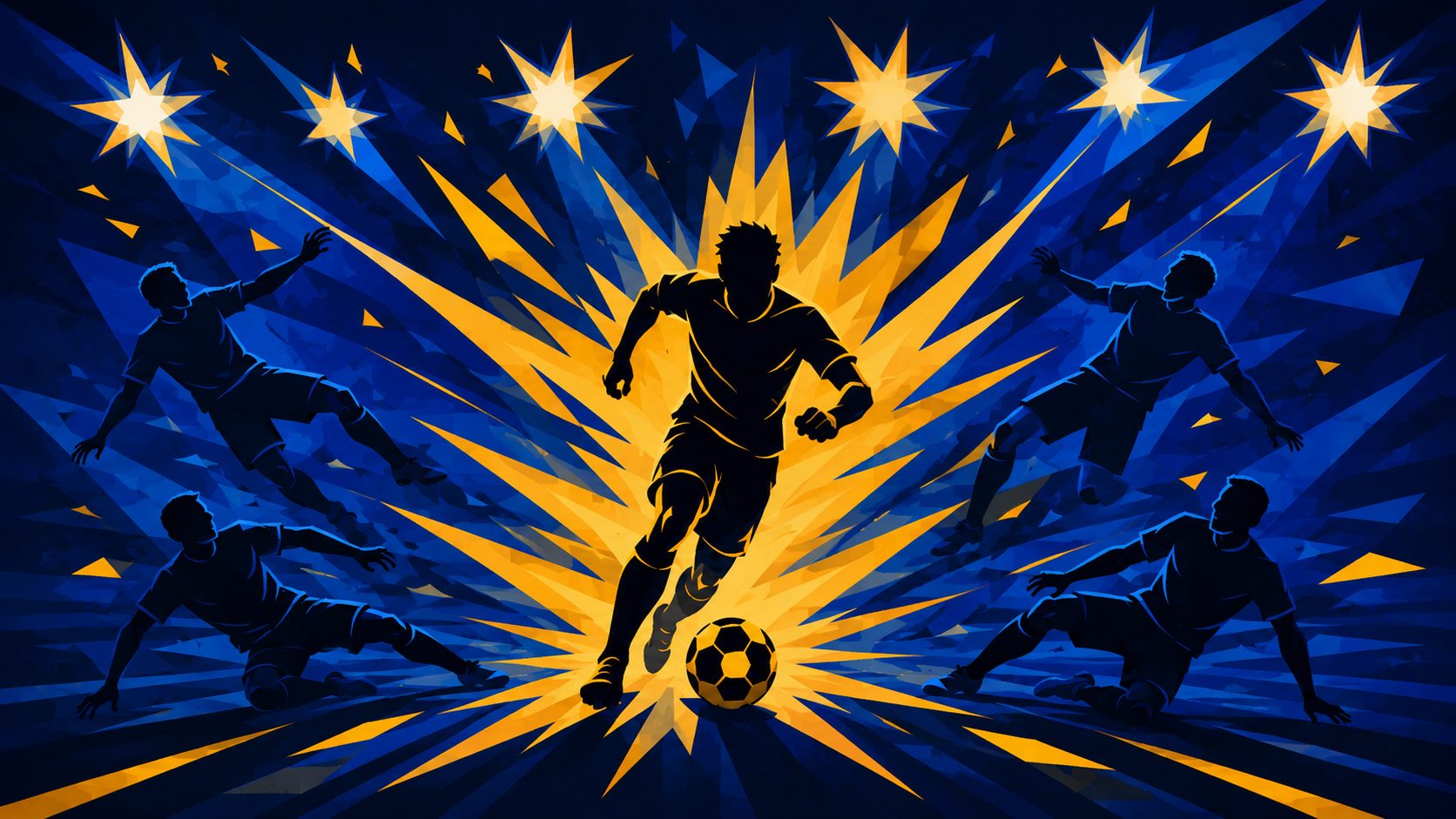
What makes the World Cup extraordinary is that it forces radically different Value Types and Thinking Styles into direct, high-stakes contact. A Red individualist has to operate inside a Blue structure. A Green-cohesion team has to find Orange ruthlessness in front of goal. Nations with deeply Purple identities field squads shaped by Orange analytical recruitment processes.
The coaches who manage this tension most effectively are not those who suppress the Red energy. They design structures that channel it, giving the individualist enough freedom to create while maintaining enough collective coherence to function. Maradona inside Bilardo’s 1986 system. Messi inside every Argentine manager who tried to build around him for 20 years before getting it right in 2022.
Spain’s defeat to Chile in the 2014 group stage was partly a failure of this kind: a team so committed to collective process that it struggled to adapt when the process was disrupted. Germany’s 7-1 semifinal against Brazil demonstrated the opposite: systematic Orange thinking applied with complete composure to a team whose psychological foundations had already crumbled.
These dynamics are not unique to sport. Every organization that has tried to build a high-performing team from people with different motivational drives faces the same collisions. The pitch just makes them visible at 120 minutes of maximum stakes.
2026: the largest experiment yet
The 2026 World Cup, running from June 11 to July 19 across 16 cities in the USA, Canada, and Mexico, is the first to feature 48 nations. For the first time in the tournament’s history, all six continental confederations are guaranteed representation.
In psychological terms, this is the fullest expression of the entire Value Type spectrum the competition has ever staged. Nations appearing for the first time carry motivational profiles the tournament has never seen at this level. The three host nations add their own complexity: Mexico’s deep Purple football identity, the USA’s intensely Orange institutional infrastructure, and Canada experiencing the psychological texture of a nation discovering its own football story in real time.
The teams that win World Cu