How a law firm doubled its caseload using MindSonar

MindSonar in Action

How a law firm doubled its caseload using MindSonar

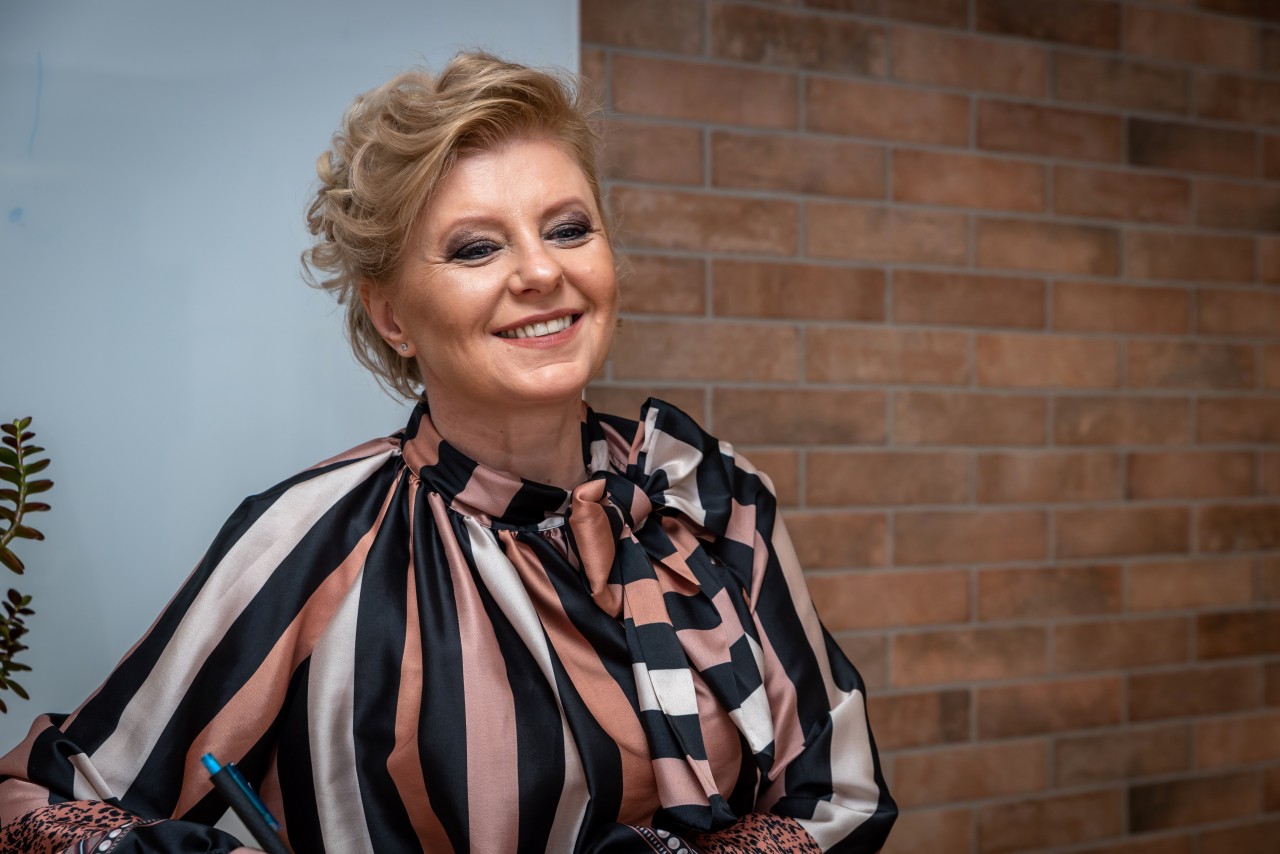
A case study by Dr. Mario Garcia & Coach Mario Alexander Garcia


Meet Dr. Mario Garcia & Coach Mario Alexander Garcia

Executive Coaches & MindSonar Certified Professionals | Neuro Strategic Coaching Institute

Dr. Mario Garcia and his son, Coach Mario Alexander Garcia, are the owners and Executive Coaches of the Neuro Strategic Coaching Institute, renowned for its coaching methodologies and MindSonar certification training.

Their institute empowers coaches, executives, and organizational leaders to use MindSonar for transformative leadership development. Trainees learn to interpret MindSonar profiles, understanding not only how individuals think but how they can adapt their thinking to various situations.

With their expertise in executive coaching and high-performance team building, the Garcias have built a family legacy centered on empowering others to reach their highest potential.

Case Study

Team alignment, strategic coaching, and growth at RMC Law Firm

Client: RMC Law Firm — a growing legal practice based in New Mexico serving clients across multiple legal domains.

Coaches: Dr. Mario Garcia (MCC) & Mario A. Garcia (PCC), serving as Executive Coaches, Retreat Facilitators, and MindSonar Certified Professionals.

Engagement: Assessment-driven coaching with a 3-day Leadership Retreat followed by a 6-month coaching integration program.

The Challenge

As RMC Law Firm expanded its caseload and internal team, leadership recognized the need to strengthen collaboration, alignment, and communication among attorneys and firm leaders. The challenges they faced are common to fast-growing professional services firms: diverse thinking styles among team members, high cognitive load and decision pressure, a need for stronger internal alignment and shared leadership language, and the desire to scale operations without eroding culture or performance.

Leadership sought an approach that was practical, data-informed, and respectful of individual autonomy — while strengthening collective performance.

The MindSonar approach: F5 team report

The engagement began with the MindSonar F5 Team Report, which provided a comprehensive cognitive and motivational map of the retreat participants. The assessment explored key dimensions including decision-making preferences, risk tolerance and change orientation, strategic versus operational focus, team motivation patterns, and stress response styles.

The aggregate team profile allowed facilitators to normalize cognitive differences, reduce misinterpretation of behaviors, and frame diversity of thinking as a strategic advantage.

3-Day leadership & team building retreat

Over three immersive days, the retreat focused on building a shared language of thinking, leadership alignment, and strategic communication. The team worked through understanding their individual and collective MindSonar profiles, translating cognitive differences into practical collaboration strategies, and reducing friction caused by unspoken assumptions.

Leadership alignment sessions clarified roles and decision authority, aligned the firm’s vision with personal leadership values, and strengthened trust and psychological safety. The retreat was highly experiential, combining guided reflection, structured dialogue, applied coaching conversations, and real-world case simulations relevant to legal practice.

Six-month coaching integration

The retreat established the foundation, followed by six months of executive and team coaching designed to reinforce MindSonar assessment insights, support leaders in applying new behaviors in real cases, maintain accountability and momentum, and translate cognitive awareness into operational results. Coaching focused on decision quality, leadership confidence, strategic delegation, and managing complexity and growth stressors.

Results & Impact

100%
Growth in client caseload
+2
New locations in New Mexico
6 mo
Coaching program duration
3 days
Immersive leadership retreat

Within six months following the retreat and coaching engagement, the firm achieved stronger internal alignment and collaboration, increased leadership confidence under pressure, and improved decision velocity without loss of quality. Leaders reported greater clarity in how decisions were made, how disagreements were navigated, and how to leverage individual strengths for firm-wide success.

Key success factors

Assessment-driven insight
MindSonar created objective awareness without judgment, giving the team a shared cognitive map.
Strategic coaching continuity
Retreat insights were reinforced through six months of long-term executive coaching.
Cognitive diversity as an asset
Differences in thinking styles were reframed as performance multipliers rather than friction points.
Practical application
Tools were immediately usable in legal and leadership contexts, not abstract theory.

This case demonstrates how neuro-strategic assessment, executive coaching, and intentional team development can directly support measurable business growth. By investing in how people think, decide, and collaborate, RMC Law Firm strengthened its internal culture and positioned itself for rapid, sustainable expansion.

Are you based in Florida and looking to get MindSonar certified or integrate it into your coaching practice?

Visit the Neuro Strategic Coaching Institute

Supporting a Bank developing an Entrepreneurial Attitude

A large Belgian insurance bank defined a new corporate strategy, in which it was important for their insurance brokers to develop a more entrepreneurial attitude.

A central factor in this development was the relationship between the insurance brokers and the local insurance agents in the community. The company defined a list of key competencies for their brokers related to dealing with these agents.

All brokers were profiled with MindSonar. Surprisingly, after a statistical analysis, it turned out that there was no significant relationship between thinking style, criteria, and key competencies on the one hand and sales volume on the other hand. Further analysis revealed that this had to do with the targets that were being set. Because targets were set at a relatively low level, their MindSonar profile did not make a lot of difference. It did not matter much how brokers thought or what they found important. The volume of sales was determined mostly by demand from the local insurance agents and the efforts of the brokers seemed to have little to do with it.

This finding led the company to change the system of setting targets. After targets were adjusted, thinking style did make a difference. A training program was developed in which brokers were trained in those competencies that their MindSonar profile showed them to be lacking in.

For this project the company won a prestigious training award.

The MindSonar professional running the project was Chris Minne (Belgium). Look him up in the Registry.

How a Mining Company Solved an Internal Conflict

A mining company had serious communication problems in their community relations team. This problem persisted, even after several group trainings and coaching sessions. The majority of the team members had great difficulty with one person. This person had even been nicknamed “Don Pesimo” (“Mister Horrible”) because every time they proposed a solution, he would disagree and point out everything that could go wrong with that proposal.MindSonar was filled out by all team members and a workshop was organised explaining Meta Programs and Graves Drives. At the end of the workshop the team scores were discussed. The team and the leader of the company, who was also present, could clearly see that their predominant Meta Program was ‘matching’ (focusing at what is good and correct), except for “Don Pésimo”, who scored very high on mismatching (focusing at what is not good and incorrect).Simply explaining to them that their teammate was not a negative person, but rather using a different thinking style, was very helpful. He was relabelled as an internal consultant, being the one person with the ability to show them the dangers and pitfalls they could not see.

Today this person sits at the head of the board of directors when they meet. He has an important role in evaluating both team decisions and team processes.  The MindSonar professional running this project was Mónica Castañeda (Peru). Look her up in the Registry.

Debt Collectors getting Results in a Socially Responsible Way

Flanderijn is a major debt collection agency in the Netherlands. In recent years debt collection has changed. Creditors used to only be interested in getting their money as quickly as possible. Today most creditors feel a social responsibility too. So there has been a change from “When do I get paid?” to “What’s happening with my customer?”

Debt collection is done most successfully by phone. At Flanderijn, on a daily basis, almost 400 employees have telephone contact with the customers of their clients. It is not an easy job. Most people and companies pay their bills. If they don’t, there is some kind of problem. So most of the time the employees work under stress and sometimes they face aggression. That’s why debt collectors are trained frequently. 

Mindsonar is used to get an alignment with the wishes of the client. Every two years Flanderijn management selects their best debt collectors. The ones that not only have a good collection results, but also have a high score on customer satisfaction and debtor satisfaction. These experts are modeled and the Mindsonar results are used to sharpen the content of the trainings.

For example in recent years we have noticed a shift in meta programs from highly internally referenced, very proactive, and procedural to more externally referenced, more reactive and more options oriented. In general criteria changed have from ‘results’ to ‘contact’.

The MindSonar professional running this project was Kees Over de Vest (Netherlands). Look him up in the Registry.

Enter your text here…

Enabling a Famous Automobile Brand to find Good Sales People

Selling automobiles in the top segment usually involves several hours of personal contact between a salesperson and a customer. In this segment, personal relationships are an even more important factor than in many other sales situations .

All Dutch salespeople of one a top automobile brand were profiled with MindSonar. A benchmark profile was developed using statistics. Their meta programs and criteria were related to the number of cars they sold per year. The benchmark profile— where different Meta Programs were given different weights — correlated highly with the number of cars sold.

From then on, all candidates for sales positions were profiled with MindSonar. How similar their profile was to the desired profile partly determined whether or not they were hired. Also, in the current sales force, salespeople who diverted from the desired profile were offered a training course, tailored especially to develop their underdeveloped Meta Programs.

Subsequently, benchmark profiles were developed for location managers, and service managers too, to be used in hiring and training.

The MindSonar professional running the project was Johan Hoevers (Netherlands). Jaap Hollander did the benchmarks for the location and service managers. Look them up in the Registry.

Enter your text here…

Helping Child Care Workers become better Auditors

In the Netherlands, a specific set of quality criteria is used to evaluate day care centres. These criteria are audited once a year by independent institutions. To improve quality, it is also important for the day care centres themselves to do audits internally with their own employees. Quite often this does not happen enough. So what exactly does it take to be a good internal child care auditor? 

A MindSonar Professional investigated two things: first of all what the Meta Programs of a good auditor are. And secondly, how this profile relates to that of a good child care worker. They already suspected these would be two quite different profiles.

They asked several organisations to tell them who their best Internal auditors were. They profiled these auditors, constructing an benchmark profile. Good auditors were found to score high on the Meta Programs ‘Visual’ and ‘Information’. They wanted to see what information had been stored about processes. Good child care workers typically had high scores on the Meta Programs ‘Kinesthetic’ and ‘People’.

So child care workers basically needed to shift their thinking style to be good auditors. The MindSonar Professional built a training program around these two Meta Programs. They achieved good results with child care workers who were starting auditing work.

The MindSonar professionals running the project was Johan de Haas (Netherlands). Look him up in the Registry.